THE aRK JOURNAL / STYLE & GUIDANCE
Should Your Wedding Ring Match Your Partner’s? A Modern Couple’s Guide
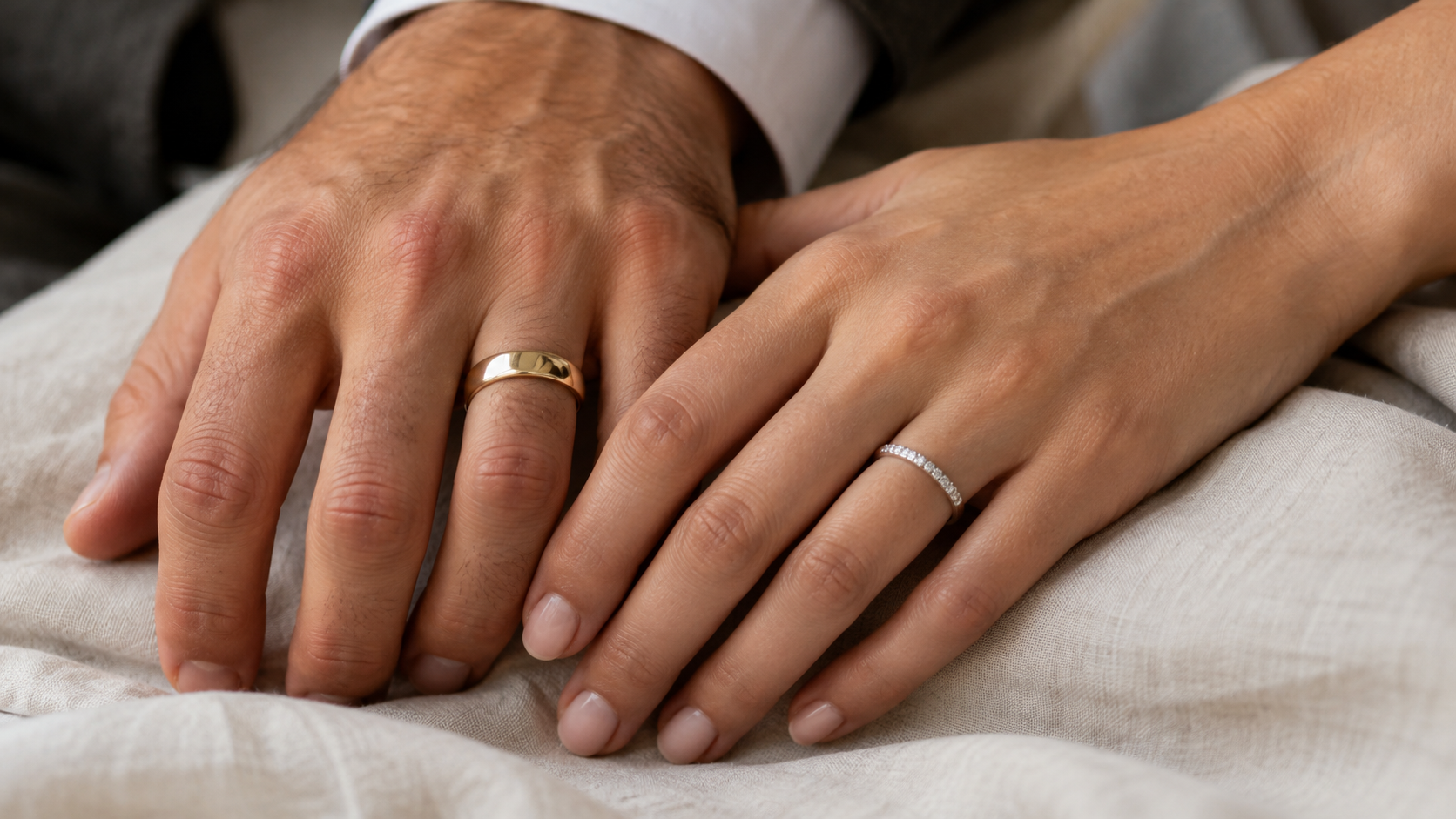
Choosing wedding rings is an exciting part of getting ready for marriage. For some couples, finding two rings with the same metal, finish, and design feels like the perfect way to celebrate their commitment. Others prefer rings that reflect their individual personalities, even when their tastes are completely different.
So, should your wedding ring match your partner’s?
The truth is that there is no single right answer. Matching wedding rings can create a traditional, coordinated look, while different designs allow each person to choose something that feels natural to wear every day. What matters most is finding rings that represent your relationship and make both partners happy.
If you are shopping for wedding bands in the United States, here is what to consider before deciding whether to match, mix, or choose something entirely your own.
Do Wedding Rings Have to Match?
No, wedding rings do not have to match. Although matching wedding bands have long been a popular choice, modern couples have more freedom to choose designs based on their personal preferences.
One partner may prefer a simple gold band, while the other loves a diamond wedding band or a contemporary platinum design. These differences do not make the rings any less meaningful.
A wedding ring is a personal piece of jewelry that becomes part of your everyday life. It should suit your style, fit comfortably, and work with your daily routine.
Some couples prefer identical rings because they appreciate tradition and symmetry. Others find that choosing different designs makes the experience more personal. Neither approach is better than the other.
The best decision is one that feels right for both of you.
Why Do Some Couples Choose Matching Wedding Rings?
Matching wedding bands remain appealing for several reasons. For many couples, the idea of wearing similar rings represents unity and a shared commitment.
Here are some reasons couples choose matching designs.
A Shared Look
Matching rings create a coordinated appearance. Whether you choose classic yellow gold, polished white gold, or platinum, similar designs can look timeless without feeling overly elaborate.
A Meaningful Tradition
Some couples enjoy following a familiar wedding tradition. Choosing matching bands can make the ring-shopping experience feel like a shared milestone.
Easier Design Decisions
If you both like the same metal and general style, selecting matching rings can simplify the process. You can start with one design and adjust the width or fit for each person.
A Personal Connection
Matching rings can serve as a daily reminder of your commitment. Some couples also add an engraving, such as their wedding date or initials, to make the rings more personal.
Still, matching does not have to mean identical. Even a small shared detail can create a meaningful connection.
Why More Couples Are Choosing Different Wedding Bands
Not every couple has the same taste in jewelry, and there is no reason to expect them to.
One person might prefer understated jewelry with clean lines. The other might love bold designs, diamonds, or unusual metal combinations. Choosing different wedding bands allows both partners to stay true to their preferences.
There are several ways to do this while keeping the rings connected.
Different Metals, Similar Design
Imagine one partner wearing a yellow gold wedding band while the other chooses platinum. If both rings have a simple, polished finish, they can still feel coordinated.
Different Widths
A narrow band and a wider band can complement each other without looking identical. Ring width should depend on finger proportions, comfort, and individual taste rather than a rule about which partner should wear which size.
Different Details
One ring might feature a plain surface, while the other includes diamonds, engraving, or a textured finish. A shared design element can tie the two rings together.
Completely Different Styles
Some couples prefer no visual connection at all. One may choose a traditional gold band, while the other selects a modern design in a different metal.
That is perfectly fine. A meaningful relationship does not require identical jewelry.
How to Coordinate Wedding Bands Without Matching Exactly
If you want your rings to feel related but still look different, focus on one or two shared features.
1. Choose a common metal. Both rings can feature yellow gold, white gold, or platinum while using different designs.
2. Match the finish. A brushed finish on both rings creates a subtle connection, even if one is gold and the other is platinum.
3. Select complementary shapes. Simple, rounded bands can look cohesive even when their widths and colors differ.
4. Add matching engravings. A wedding date, initials, or a meaningful phrase creates a private connection that does not affect the rings' exterior appearance.
5. Choose a shared design inspiration. Nature-inspired textures, geometric details, or minimalist styling can connect two rings without making them identical.
A good starting point is to choose one detail you both like, then allow each partner to personalize the remaining features.
Which Wedding Band Metal Is Right for You?
Metal choice affects the appearance, maintenance, durability, and price of a wedding ring. Couples do not have to choose the same metal, but understanding the differences can help them make an informed decision.
Yellow Gold
Yellow gold is a classic option for couples who appreciate a warm, traditional look. It comes in different karat options, including 14K and 18K, which differ in gold content and material properties.
White Gold
White gold offers a bright, silvery appearance that works well with many contemporary designs. It is commonly finished with rhodium plating, which may need refreshing as the ring is worn.
Rose Gold
Rose gold has a distinctive pinkish tone created by its alloy composition. It can be a good choice for someone who wants a warm color with a slightly different appearance from traditional yellow gold.
Platinum
Platinum is a naturally white precious metal known for its density and durability. It develops a patina with use and may require professional attention to maintain the finish you prefer.
Alternative Metals
Titanium and tungsten are popular choices for certain modern wedding bands. However, resizing and repair options vary by material and design, so ask about these limitations before purchasing.
When comparing metals, consider your budget, daily activities, preferred appearance, and long-term maintenance needs. A jeweler can explain which options make the most sense for your situation.
Should Your Wedding Band Match Your Engagement Ring?
If one or both partners wear engagement rings, the relationship between the engagement ring and wedding band is worth considering.
Some engagement rings pair easily with a straight wedding band. Others have a large center stone or a setting that makes a straight band sit away from the engagement ring.
A curved or contoured band may create a closer fit. Alternatively, you may prefer a small gap as part of the overall design.
The metal combination also matters. When two rings sit directly against each other, friction can contribute to wear depending on the metals, settings, and shapes involved.
Before buying, try the wedding band alongside the engagement ring. Check that both feel comfortable, sit as intended, and do not interfere with the center stone or setting.
Your partner's wedding band does not need to match your engagement ring, either. Focus on the pieces each of you will enjoy wearing.
What Should You Consider Before Buying Wedding Bands?
Wedding rings are often worn daily, so practical details deserve as much attention as appearance.
Comfort and fit: Try different widths and profiles to see what feels comfortable on your finger.
Lifestyle: Consider your job, hobbies, and activities when choosing a metal and setting.
Budget: Decide how much you want to spend before comparing designs and diamond details.
Maintenance: Ask about cleaning, polishing, replating, resizing, and repair services. Our guide on how to clean and care for diamond jewelry covers the basics.
Long-term wear: Consider whether the design suits your everyday habits and how you want the ring to age.
Personal style: Choose something that feels like you rather than following a trend simply because it is popular.
Future adjustments: Confirm whether the ring can be resized and what the jeweler's policies cover.
It is also worth comparing warranties and service policies. Two rings that look similar may come with different maintenance options, so understand what is included before making your purchase.
Is It Better to Buy Matching or Mismatched Wedding Bands?
The right choice depends on what you value most.
Matching wedding bands are a natural fit for couples who enjoy tradition, coordinated styling, or a shared design. Different wedding bands work well for partners who have distinct tastes and want their rings to reflect their individual personalities.
There is also a middle ground. You can choose different metals, widths, or details while keeping one feature consistent.
For example, both partners might select a simple band with a matte finish, but one chooses yellow gold and the other platinum. The rings remain connected through their design while allowing each person to make an individual choice.
If you are unsure, try on several combinations together. Seeing the rings side by side can help you decide whether matching, coordinating, or contrasting designs feel most natural.
Final Thoughts: Choose Rings That Reflect Your Relationship
Your wedding rings do not have to look alike to carry the same meaning.
Some couples love the familiar appeal of matching wedding bands. Others prefer different metals, contrasting finishes, or designs that express their individual styles. Both approaches offer a meaningful way to mark the beginning of married life.
When choosing your rings, focus on comfort, craftsmanship, quality, and personal preference. Discuss what matters to each of you, compare wedding bands and men's rings together, and choose designs you will be happy to wear for years to come.
After all, the purpose of a wedding band is not to prove that two people have identical tastes. It is to represent a commitment that belongs to both of you.
Short Summary
Choosing wedding rings is an exciting part of getting ready for marriage. For some couples, finding two rings with the same metal, finish, and design feels like the perfect way to celebrate their commitment. Others prefer rings that reflect their individual personalities, even when their tastes are completely different.
Frequently Asked Questions
Do wedding rings have to match?
No. Matching bands are a popular tradition, but many couples choose different metals, widths, or details. What matters is that each ring suits the person wearing it.
How can we coordinate wedding bands without matching exactly?
Pick one or two shared features, such as the same metal, the same finish, a similar profile, or a matching engraving, and let each partner personalize the rest.
Can my wedding band be a different metal from my partner's?
Yes. Yellow gold, white gold, rose gold, and platinum can all be paired together. A shared finish or band shape helps different metals look connected.
Should my wedding band match my engagement ring?
It helps if the two rings sit comfortably together. Try them on as a set, and consider a curved or contoured band if the engagement ring's setting leaves a gap.
Related products & services
Explore pieces and guidance connected to this article.
Loading related pieces…