THE aRK JOURNAL / STYLE & GUIDANCE
Colored Gemstone Jewelry: Find Your Perfect Shade
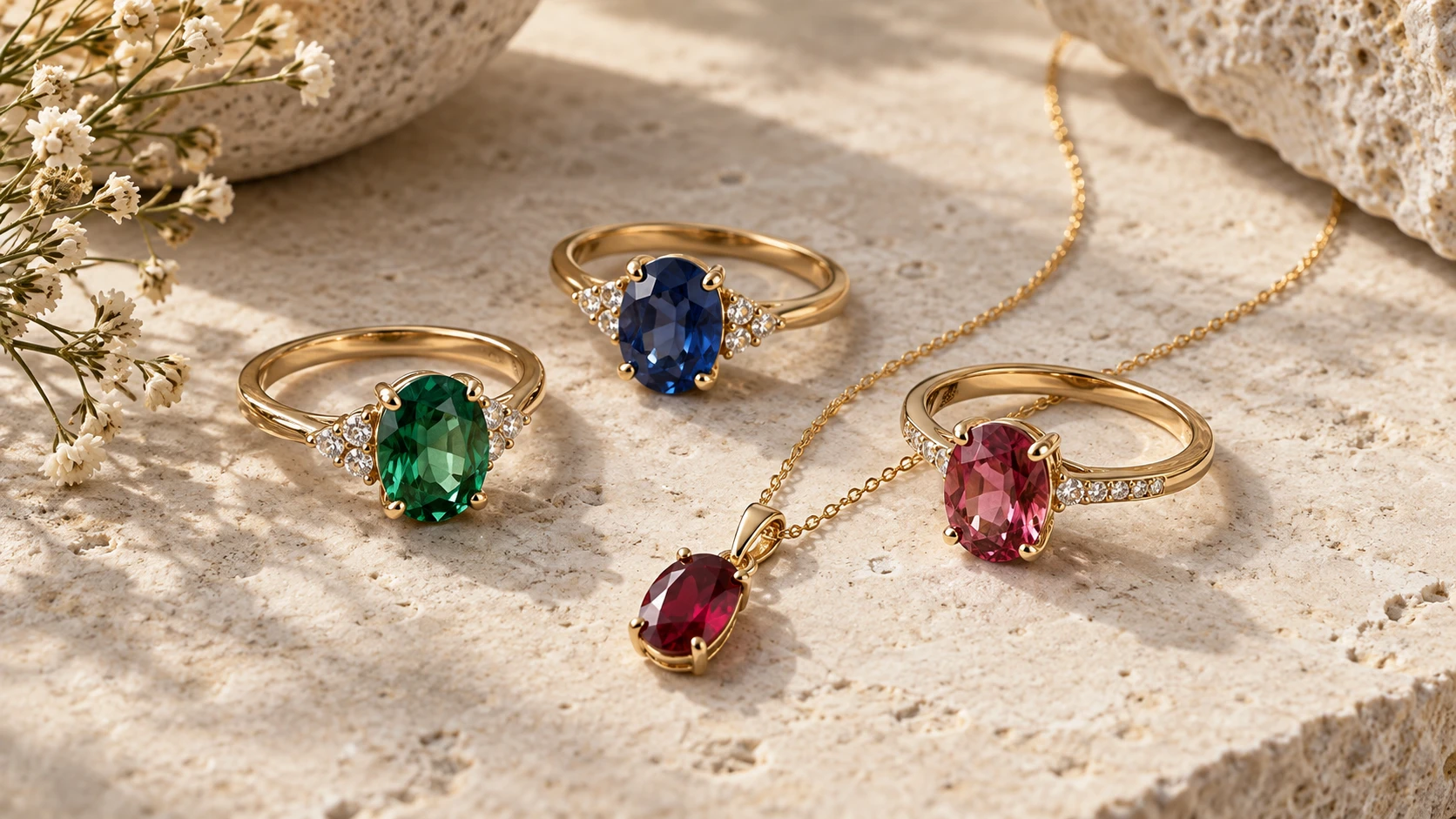
A flash of green at your neckline, a deep blue ring, or a pair of soft pink earrings can change the feel of an entire outfit. Colored gemstone jewelry gives you room to express your style through shades you love, whether you prefer a subtle accent or a striking centerpiece.
Finding your perfect shade starts with your own taste. Think about the colors you reach for, the jewelry you already wear, and the occasions you want a new piece to suit. Use this guide to explore color combinations, compare gemstones, and choose a piece that feels like you.
How to Choose Gemstone Jewelry in Colors You Love
Open your wardrobe and notice the colors that appear most often. If you wear navy, white, and gray, a blue gemstone can make an easy starting point. If your clothes lean toward cream, brown, and earthy tones, try a warm golden shade or a rich green. For an outfit built around black, a saturated gemstone can become the focal point.
You can take two styling directions: choose a gemstone close to your outfit's palette for a coordinated look, or introduce a contrasting shade for more impact. A green pendant with a green blouse feels tonal; the same pendant against a blush dress creates a different mood. Neither approach needs a strict color rule.
Gemstone Colors: Find Your Perfect Palette
These familiar gemstone and color pairings offer a place to begin. Individual stones vary in shade, and many gemstone varieties occur in more than one color. Compare the actual piece instead of choosing from the gemstone name alone.
- Blue: Explore blue sapphire for a rich accent or aquamarine for a lighter blue look. Try blue earrings with a crisp white shirt, or a blue pendant with a navy neckline.
- Green: Emerald and peridot offer different expressions of green. Consider a green center stone with a neutral outfit when you want the color to stand out.
- Red: Ruby and red garnet bring a bold touch to rings, pendants, and earrings. A single red accent can add interest to a simple evening outfit.
- Pink: Pink sapphire, pink tourmaline, and morganite offer options for a pink palette. Try a delicate pink pendant for a subtle accent, or larger earrings for more presence.
- Purple: Amethyst is a starting point for exploring purple jewelry. Pair it with cream or gray for a gentle contrast, or try it with green for a more expressive combination.
- Yellow and orange: Citrine and yellow sapphire offer warm color options. Consider these shades alongside ivory, denim, or earthy tones.
Choose the Shade, Then Look at the Whole Stone
Two stones with the same name can look quite different. Notice the main color, how light or dark it appears, and whether the color feels soft or intense. Also look at how evenly the color appears across the stone and how its cut presents it. A gemstone you love in a close-up photograph may look different at its actual size.
Ask for views in more than one lighting condition when shopping online. Screen settings and photography can affect the color you see. Review the dimensions as well as the carat weight to understand the piece's scale. For more about evaluating stones, see GIA's guide to colored gemstone value factors.
Find a Metal Pairing That Suits Your Style
The metal around a gemstone becomes part of its color palette. As a styling starting point, try yellow gold with green or warm-colored stones, white metal with blue or purple, and rose gold with pink. These are combinations to explore, not limits on what you can wear.
If you already wear a favorite wedding band, chain, or watch, consider how the new piece looks alongside it. Matching the metal can make the combination feel cohesive, while mixed metals offer room for variety. Try the piece against your skin and a familiar outfit, and choose the pairing you enjoy most.
Skin undertone advice can provide inspiration, but it does not need to decide your choice. Any skin tone can wear any gemstone color. Your preferred level of contrast and the overall design matter more than following a fixed palette.
Gemstone Jewelry Styling for Your Daily Routine
Think about where and how you will wear the piece. A small pendant can introduce color without changing your everyday style. Earrings place that color close to your face. Gemstone rings make the stone easy to admire throughout the day, while a bracelet adds a moving accent.
For rings and bracelets, ask about suitability for frequent wear. Gemstone durability includes resistance to scratching, chipping, and environmental effects; hardness alone does not tell the whole story. The setting and the condition of the individual stone also matter. GIA explains these durability factors in more detail.
When styling several pieces, start with one colored focal point. Add a simple chain, band, or pair of studs, then decide whether you want more color. Repeating one shade can tie the look together; combining two colors can give it a more personal feel.
Questions to Ask Before You Buy
- What is the gemstone? Confirm its identity and whether it is natural, laboratory-grown, or a simulant.
- Has it been treated? Ask about disclosed treatments and whether they affect care requirements.
- What are the measurements? Check the stone and jewelry dimensions, metal details, and ring or chain size.
- Is it suitable for my routine? Describe how often you plan to wear it and ask about the stone and setting.
- What documentation is available? For a significant purchase, ask about an independent gemological report and what it establishes.
- What are the return and service terms? Review resizing, returns, and maintenance information before ordering.
A gemological report can help establish identity and detectable treatments. See GIA's colored gemstone buying guide for further guidance.
Gemstone Jewelry Care: Protect Your Color and Setting
Follow care instructions for the specific gemstone, its treatments, and its setting. Avoid assuming that one cleaning method is safe for every colored stone. Check with your jeweler before using an ultrasonic or steam cleaner.
Store pieces separately to help prevent scratches, and remove jewelry before activities that expose it to knocks or harsh chemicals. Some gemstones are sensitive to heat or prolonged light exposure. If a stone feels loose, stop wearing the piece and have the setting checked. Read GIA's jewelry care guidance for more information.
A Shade That Feels Like You
Your perfect gemstone shade is one you will enjoy reaching for. Begin with a color you love, explore it in a few designs, and check how the piece fits your wardrobe and routine. Whether you choose soft pink, deep blue, vibrant green, or warm gold tones, let color bring a personal touch to the jewelry you wear.
Short Summary
Find a gemstone colour you enjoy and pair it with a metal and design that suit your wardrobe. Consider your daily routine, budget and the stone’s care needs, and ask about its identity and treatments before buying. Colour and personal preference can guide a piece you will enjoy wearing.
Frequently Asked Questions
Which gemstone color goes with everything?
There is no single shade for every wardrobe. Start with a color you already wear often, or choose one that complements your favorite neutrals. A smaller stone can make a vivid shade easier to incorporate into everyday outfits.
Should I choose a gemstone based on my skin tone?
You can use skin tone suggestions for inspiration, but your preference comes first. Compare a few colors near your face or on your hand and notice which you enjoy wearing.
Can I mix different colored gemstones?
Yes. Start with two colors and repeat one elsewhere in your outfit if you want a coordinated look. Keeping the jewelry's scale or metal consistent can help connect the pieces.
Can colored gemstone jewelry be worn every day?
Suitability depends on the gemstone, any treatments, the setting, and your activities. Ask about the specific piece, especially for rings and bracelets that may receive more knocks during daily wear.
How can I judge gemstone color online?
Look for multiple images and a video, and ask for views under different lighting if available. Check the written color description, dimensions, and return policy; a screen image cannot guarantee an exact color match.
Related products & services
Explore pieces and guidance connected to this article.
Loading related pieces�